WoW Gold Farms
 WoW Forever · Economy and Vendors
How to Make Gold in WoW Forever: Every Method, Ranked by Who It Fits
A start to finish gold plan for WoW Forever that orders every method, gives a plain verdict on each, and tells a new character, a level 60 and an alt army where to start.
The short answer
Sell what you loot, take the quest coin, gather two things you can use, and only then think about crafting. That order works because each step costs nothing but time and each one teaches you what the Auction House pays. A new character should spend its first 30 levels on quest money, vendor trash that is worth more than it looks, and one gathering profession. A level 60 with a free hour should farm a dungeon or a camp whose drops already sell, then spend the proceeds on the one gold sink that matters, the mount. An alt army should gather for the main character and let the alts be the bank.
The prices make the case.  Light Leather sells at 10 copper,
 Copper Bar at 50 copper,
 Bronze Bar at 1 silver49 copper and
 Rugged Leather at 4 silver95 copper. Those are the four materials the most recipes in the client want, which is why they move.


Lowest buyout across the WoW Forever realms we scan, read live from player scans of the Auction House. Prices move hourly, so check before you list. Verified
How to read this page
Every method below gets the same three lines: what it costs you, what it pays, and who it is for. Where a number is a snapshot we date it. Where a fact is Classic behavior that we have not checked in the Forever client, the text says so. The method guides that follow have the full tables and the item ids.
If you only want the shortest route: read the first weeks plan if the realm is young, the profession ranking once you pick a craft, and the class pairing page for the combination that fits your class.
The methods in the order to try them
| Order | Method | Costs you | Best for | Guide |
|---|---|---|---|---|
| 1 | Quest rewards and vendor trash | nothing but questing | every new character | Quest gold |
| 2 | Gathering while you level | one profession slot | new characters and alts | Gathering while leveling |
| 3 | Bind on equip greens | luck and bag space | any level | BoE greens |
| 4 | Cloth and leather ladders | kills or skinning | level 20 to 60 | Cloth ladder and leather ladder |
| 5 | Dungeon and mob farms | a group or a class that can solo it | level 60 with an hour | Dungeon farms |
| 6 | Crafting for margin | skill points and reagents | after you have gathered a month | Profession guides |
| 7 | Auction House habits | attention | everyone, always | Auction House guide |
| 8 | Planning for the sinks | none, it is a plan | everyone before level 40 | Riding and bags |
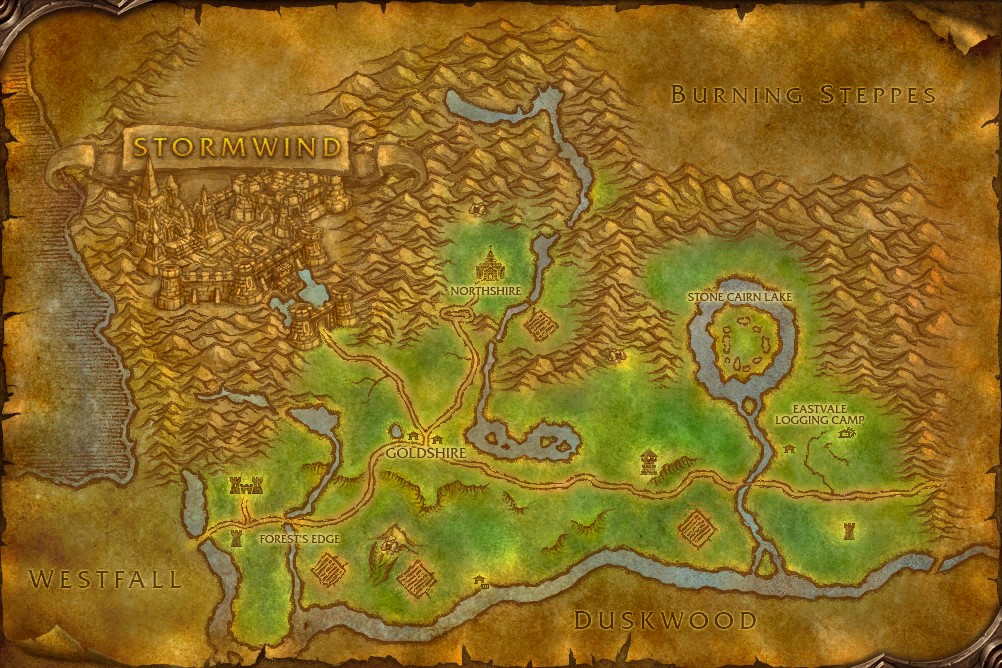
Elwynn Forest: Eastern Kingdoms, Zone ID 12
1. Quest rewards and vendor trash: the floor
Quest coin is the only income that does not depend on another player. In the part of the quest cache we hold, 258 quests from levels 1 to 29, 108 pay coin, and together they pay 5 gold41 silver. That is a sample of Forever, not the whole game, and the guide says so. The best zones in that sample are Darkshore and Silverpine Forest. Read Quest gold for the list.
Vendor trash is the other half. Most grey items belong to the merchant, but beast parts and old armor pieces often list higher than the vendor pays. The rule is in Vendor prices: vendor the grey item unless the Auction House already lists it above its vendor value.
Verdict: do this on every character, always. It is slow and it is the floor you build on. It will not make anyone rich, and nothing else on this page is as safe.
Fits: a new character, for the first ten levels, as in Gold from level 1 to 10.
2. Gathering while leveling: the first real money
Gathering costs a profession slot and no gold. The question is which one. Our count of client recipes that use each material, bracket by bracket, says Skinning has the largest demand at every tier, Mining has the best margins in the middle and Herbalism has the smallest demand until the last bracket before 60. The numbers are in the gathering comparison.
The tier guides add what to pick up at each step: Copper Ore first, then Tin and Bronze, then Iron and Mithril, and finally Thorium and Arcane Crystal. For herbs, begin with Peacebloom and Silverleaf and move on to Mageroyal and Briarthorn. The new zones have their own pages: Zephras Isle, the Riverglades and Mount Hyjal.
A worked comparison. Briarthorn is wanted by 7 Alchemy recipes and Goldthorn by 15, and they sell at 75 copper and 2 silver90 copper. Copper Ore is wanted directly by one recipe, the Mining smelt itself,, but the Copper Bar it becomes is wanted by 51 Blacksmithing recipes. That is why the guide on copper tells you to check whether the bar is worth more than the ore before you smelt.
Verdict: the best use of your first profession slot. Take Skinning if you want steady sales, Mining if you want margin, and Herbalism only if you plan to craft potions.
Fits: a new character from level 5, and every alt, as in Alt leveling.
3. Bind on equip greens: the lottery ticket
A green you cannot use is a ticket that sometimes pays a lot. World-drop weapons and bracers tend to list far above their vendor price, and the guide shows the ratio for specific items. Caster items behave differently and sell closer to vendor value. The page to read is BoE greens, and the cheaper Classic habit of checking before you vendor applies fully.
Verdict: free if you already kill things, but never plan around it. A listing is an asking price and we cannot see what sold.
Fits: everybody, since it costs only a bag slot.
4. Cloth and leather ladders: selling the stuff that drops
Every humanoid you kill drops cloth, and every beast you skin drops leather. The ladders are the order in which each grade becomes useful.  Linen Cloth is the first rung and
 Runecloth is the late one. The price of each is in the cloth ladder and the leather ladder, with where to find leather in Where to farm leather.
Here is the number nobody prints. Direct demand for raw cloth is thin: Linen is used by 6 Engineering, 3 Blacksmithing, 2 First Aid and 1 Tailoring recipe, and Silk by 7, 2 and 1. Leather is the opposite. Rugged Leather is used by 163 Leatherworking, 21 Blacksmithing, 14 Engineering and 13 Tailoring recipes. So cloth sells because Tailors turn it into bolts, and leather sells because every other profession needs it directly. If you must choose a drop to keep, keep leather.
The special cases are Devilsaur Leather, Felcloth and Elemental essences. Each has a short reagent bill and a small crowd of buyers.
Verdict: the most reliable way to turn kills into gold from level 20 up, and the one that suits a class built to kill in groups, such as the Mage in AoE farming or the Hunter in solo farms.
Fits: level 20 to 60, and a level 60 with an hour.
Stranglethorn Vale: Eastern Kingdoms, Zone ID 33
5. Dungeon and mob farms: the level 60 hour
A farm is a repeatable place that drops something that sells. Our guides read the client's encounter lists and check which drops can be traded at all, because in Forever many cannot. The page tells you which of these farms pays:
- Deadmines for low levels.
- Scarlet Monastery and Maraudon for mid levels.
- Stratholme, Dire Maul East, Dire Maul Tribute and Blackrock Depths at the top.
- The new dungeon, Manor Mistmantle.
A cautious note on all of them: a route that sounds good has not been timed, so we rank the drops by what they sell for, not how quickly you collect them. The route box on each page says "not walked yet" for that reason.
Verdict: worth an hour when the drop is a tradeable material and the Auction House lists it at a clear multiple of the vendor price. Skip a farm whose drops bind to you.
Fits: a level 60 with an hour, and a group.
6. Crafting for margin: where the money is, and where it hides
Crafting turns two prices into one. The craft pays only if the finished item lists above the sum of its reagents plus the Auction House cut. Every profession guide has the reagent table for its own crafts: Leatherworking, Alchemy, Tailoring, Engineering, Blacksmithing and Enchanting. The secondary trades are Cooking, Fishing and First Aid.
Three examples with live tags. The Forceful Heavy Armor Kit lists at 24 silver43 copper. The Mageweave Reagent Bag lists at 2 gold41 silver. The dye every other profession wants,  Cerulean Dye, lists at 14 silver. The new things are where the margins hide, because they have the least price history. The catalogues are New recipes, New materials and Skyforged armor.
The bottleneck is  Pristine Leather, which lists at 1 silver39 copper. Our scarce materials guide covers what is known about its source. Plan any rare craft around that line first.
Two crafted objects are worth one line each: the campsite reagents and the Tanning Rack. The scarcest herb has its own page, Black Lotus, with the flask math that makes one lotus the bottleneck.
Verdict: the highest ceiling and the highest cost of being wrong. Do it after a month of gathering, not before, and pick the profession with the pairing page.
Fits: a character past level 30 with a stock of its own materials.
7. Auction House habits: the multiplier on everything above
The Auction House is not a method, it is how you get paid for every other method. Five habits matter:
- Check the depth. A price with thousands of listings is real. A price on two listings is a guess.
- Compare ratios. Whether a bar is worth more than its ore is a better signal than either price.
- List one at a time. You set the price. Do not race yourself to the bottom.
- Sell in the order of demand. Raw materials sell fastest when many players are new.
- Keep a reserve. Hold a stack of the scarce item for the week the price moves.
Our prices are player scans, since Forever has no Blizzard auction feed, and the Auction House guide explains what that means for a price. The new Black Market is reported by players and is not in our data, so read the Black Market page before you bid. The goblin vendor players report, who may fix a ceiling on reagent prices, is in Mister Graphed, and the coin is in Undermine coins.
Verdict: the cheapest source of extra gold on this page. It costs attention, not gold.
Fits: everyone, every day.
8. The gold sinks to plan for
Spending is half of gold. Two sinks matter before anything else.
Riding. In the client, every ordinary level 40 mount carries a buy price of 20 gold and every ordinary level 60 swift mount carries 200 gold. The training fee for the skill is server data, which the client does not hold, so it is not on this page. The numbers and the vendor list are in Riding cost.
Storage. The cheapest vendor bag carries a buy price of 5 silver for 6 slots, and the vendor ladder tops out at 10 gold for 12. Crafted bags are usually the better buy, and the new reagent bags, such as  Mageweave Reagent Bag, are worth pricing against plain bags. Bank slot costs are not in the client, so we do not print them. See Bank and bag costs.
The Legacy system is a third lever. The Legacy Points guide shows which of the 21 live perks save gold, and Bountiful Harvest shows what the harvest perk does at each tier. Each character can spend up to 16 points, so you choose.
Verdict: plan the 20 gold mount before level 40, and buy bags only when a crafted one is cheaper than the vendor sack.
Fits: everyone.
Which method for which player
| You are | Start with | Then | Skip |
|---|---|---|---|
| A new character | quest coin, vendor trash, one gathering profession | the bracket guides from 1 to 10 up | crafting, until you hold materials |
| A level 60 with one hour | a farm whose drops list above vendor value | sell raw drops, craft only with materials you already hold | farms whose drops bind |
| An alt army | gather on every alt, sell on one | the bank alt and Legacy perks | a second crafter on every alt |
| A crafter | the one profession with a shared material | your pair from the class page | a craft whose dye or scarce leather you cannot buy |
The bracket guides give the same advice by level: 10 to 20, 20 to 30, 30 to 40, 40 to 50 and 50 to 60. The new zones are summarized in New zones and their gold, and the Legacy Points guide covers the account side.
A plan from level 1 to the first mount
- Take every quest that pays coin and vendor the grey items that list under their vendor price.
- At level 5, take one gathering profession. Skinning if you kill beasts, Mining if you travel to ore, Herbalism if you want potions.
- Hold
 Copper Ore, herbs and leather instead of selling them at the first price you see, then check the ratio of raw to refined before you vendor.
- List what you do not need, one at a time.
- At level 30, pick a crafting pair that shares your gathering profession's material.
- Before level 40, count the 20 gold mount and the training fee you will see at the trainer.
- At 60, pick one farm from the list above and sell what it drops.
- Level
- 1 and up
- Profession
- none required, a gathering profession helps
- Group
- Solo for most methods
What would change this page
- A real Forever price history. The realm is young. As it settles, today's ratios will shift and the craft margins will tighten.
- The source of Pristine Leather. If it turns out to be a drop from many sources, Leatherworking improves. If it is rare, Alchemy improves.
- Training costs. When the riding training fee is known, the mount bill is complete.
- Walked routes. We have not walked a single farm. When we do, the route boxes change.
Changelog
- 2026-11-24: first version. Demand counts from our profession extract (build 70124), item data from client build 70291. Quest figures come from our quest cache. Prices are live medians from player scans.
Related gold guides
Economy and VendorsWoW Forever First Weeks: What to Gather, Craft and HoldLaunch facts, one pass demand for the starter materials worked out from the client, and a week by week plan for what to gather, craft and hold.
 Crafting ProfessionsThe Best WoW Forever Profession for Gold, RankedA ranking of every Forever profession built from the client: book size, new recipes and export demand, with live Auction House prices for the key products.
 Leveling GoldAlt Leveling for Gold in WoW Forever: Gatherer Alts, Bank Alts and Legacy PointsWhich two gathering professions to give an alt, by bracket; the Legacy Points alts earn for the account; and the bank alt's bag bill.
 Auction House and MarketsWoW Forever Auction House Prices: Live Numbers and How They WorkPlayer scans, the faction houses, the vendor versus Auction House gaps we found, and how to read a live price.
How this guide was written
Prices on this page are read live from TheWoWDB Auction House tables when the page loads. Item names, icons, zones and art come from our own datamine of the game client. We do not publish gold-per-hour numbers for any route nobody has walked and timed, so where a rate would go this page says so. Item and recipe facts are labelled with the WoW Forever client build they were read from; Blizzard patches can change them. Read the full method or the about page.