WoW Gold Farms
 WoW Forever · Crafting Professions
Best Profession Pairs by Class in WoW Forever, Judged for Gold
Two professions for each of the nine classes in WoW Forever, picked for the armor the class wears, how it farms, and what the live Auction House pays for the materials.
The short answer
Pick the pair by what your class already does for free. Casters that wear cloth should take Tailoring so they craft their own armor, and then add Enchanting or Alchemy depending on whether they want to sell dust or dye. Classes that wear leather should take Skinning and Leatherworking, because Rugged Leather feeds 163 Leatherworking recipes and sells at 4 silver95 copper. Classes that wear mail and plate should take Mining and Blacksmithing, because Bronze Bar is eaten by 69 Blacksmithing recipes and sells at 1 silver49 copper. Healers and druids who stand around a lot are the best Herbalism and Alchemy players, because Alchemy has the cheapest skill climb in the game.
That is the whole logic. The rest of this page shows the numbers behind it, class by class, and says plainly where we are working from Classic rules instead of Forever client data.


Lowest buyout across the WoW Forever realms we scan, read live from player scans of the Auction House. Prices move hourly, so check before you list. Verified
What we can prove and what we cannot
Be careful with class advice, because most of it is memory. Here is the split for this page.
- From our data: which recipes use which material, how many reagents each recipe takes, which recipes are new in Forever, and the live Auction House price of every material and product named here.
- Labelled as Classic: which armor each class can wear, what each class does well while farming, and which reagents a class burns. Our profession extract does not carry class proficiencies, and we have not read a Forever class table. Where a line below says "in Classic", check it in the client before you spend a skill point on it.
- Not on this page: any claim about how fast a class clears a camp. Nobody has walked these routes for us yet.
The ranking of the professions themselves is in the best profession for gold ranking, and the choice between the three gathering professions is in gathering while leveling. This page only answers the class question.
The demand table behind every pick
A profession pays when many recipes want the thing it makes. These counts are the number of client recipes that use each material, split by the profession that crafts with it. They are our own tally from the build 70124 extract.
| Material | Where the recipes are | Why it matters for a pair |
|---|---|---|
 Light Leather | 82 Leatherworking, 8 Blacksmithing, 6 Tailoring, 3 Engineering | the leather ladder starts here and a Leatherworker needs it first |
 Rugged Leather | 163 Leatherworking, 21 Blacksmithing, 14 Engineering, 13 Tailoring | the biggest single demand count of any gathered material |
 Linen Cloth | 6 Engineering, 3 Blacksmithing, 2 First Aid, 1 Tailoring | cloth is mostly sold as bolts and bandages, not raw |
 Silk Cloth | 7 Engineering, 2 First Aid, 1 Tailoring | thin direct demand, so Silk sells through finished gear |
 Copper Bar | 51 Blacksmithing, 11 Engineering, 2 Mining | the starter metal |
 Bronze Bar | 69 Blacksmithing, 12 Engineering | the bottleneck bar for mid-level smiths |
 Mithril Bar | 54 Blacksmithing, 37 Engineering, 1 Alchemy | the best two-profession demand of any bar |
 Strange Dust | 31 Enchanting, 10 Blacksmithing, 2 Leatherworking | dust is bought by crafters, not only by enchanters |
Read it as a shopping list for your own pair. If you gather what your crafting recipes eat, you pay nothing for the part of the bill that matters most. If you gather something your crafting never touches, you are a seller, and the buyer is another player.
Class by class
The table gives the short version. The sections after it give the reasons.
| Class | Wears (in Classic) | Pair | Back-up second pick |
|---|---|---|---|
| Mage | cloth | Tailoring and Enchanting | Tailoring and Alchemy |
| Warlock | cloth | Tailoring and Alchemy | Tailoring and Enchanting |
| Priest | cloth | Herbalism and Alchemy | Tailoring and Enchanting |
| Rogue | leather | Skinning and Leatherworking | Herbalism and Alchemy |
| Druid | leather | Herbalism and Alchemy | Skinning and Leatherworking |
| Hunter | leather, mail from level 40 | Skinning and Leatherworking | Mining and Engineering |
| Shaman | leather, mail from level 40 | Mining and Blacksmithing | Herbalism and Alchemy |
| Warrior | mail, plate from level 40 | Mining and Blacksmithing | Mining and Engineering |
| Paladin | mail, plate from level 40 | Mining and Blacksmithing | Blacksmithing and Enchanting |
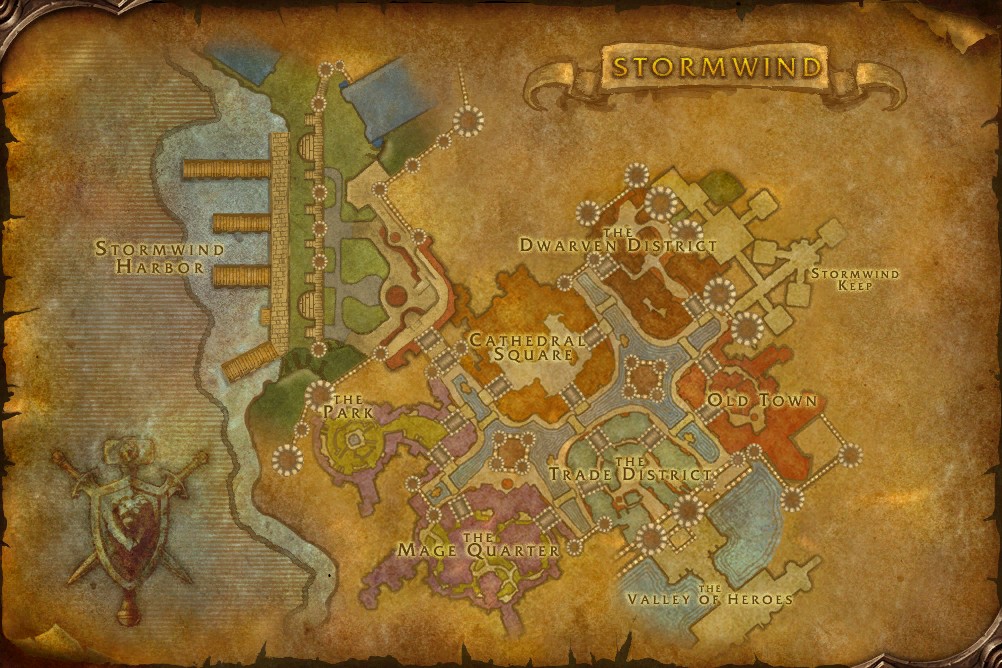
Stormwind City: Eastern Kingdoms, Zone ID 1519
Mage: Tailoring and Enchanting
A Mage wears cloth, and Tailoring is the profession that makes cloth, so the armor you craft is armor you wear. The Mage also has the one class farm built around cloth: killing groups of humanoids with area damage drops Linen Cloth, Wool, Silk Cloth and the higher cloths in bulk. The full method, with the camps we checked, is in Mage AoE farming.
Enchanting is the second pick for a reason that is easy to miss. Strange Dust is used by 31 Enchanting recipes, 10 Blacksmithing recipes and 2 Leatherworking recipes, and it sells at 43 copper. Your own cloth gear that you outgrow can be disenchanted into dust instead of vendored. That turns the one thing a Tailor always has in surplus, spare armor, into a material other crafters buy. See Tailoring for gold and Enchanting for gold for the recipes, and remember that most new Enchanting items bind when picked up, so you sell the dust and essences, not the finished item.
The cost to watch is dye. The rare Tailoring robes eat  Cerulean Dye, which sells at 14 silver, and six of them can be a large share of a robe's bill. A Mage with Alchemy instead of Enchanting makes that dye from herbs, which is why the back-up pair exists.
Warlock: Tailoring and Alchemy
The Warlock wears cloth like the Mage, so the Tailoring half of the pair is the same. The difference is the second profession. In Classic a Warlock fights with a pet and damage over time, which is slower at clearing a camp than area damage but can run without stopping to rest. That fits a profession you can level while you wait on a cooldown rather than one you must farm for.
Alchemy suits that. It has the smallest recipe bill to climb, because the potions are cheap, and it makes the dyes and acid that 185 recipes in other professions need. A Warlock who makes their own Cerulean Dye turns the biggest cost of a rare robe into a herb bill. Shadow Oil is the cheap anchor product at 17 silver28 copper, and each craft makes two. Details are in Alchemy for gold.
Felcloth is the Warlock's own sideline. It is a high-end cloth that Tailors want and that Warlocks tend to farm in Classic. See Felcloth in WoW Forever for every recipe that uses it.
Priest: Herbalism and Alchemy
A Priest has the weakest solo kill speed of the cloth classes in Classic, so the sensible pair is one that does not depend on killing. Herbalism is gathered while you quest, and it costs no kills at all. Pair it with Alchemy and your herbs become potions and dye. Briarthorn is used by 7 Alchemy recipes and Goldthorn by 15, so a Priest who picks both is supplying their own recipe list.
The honest weakness is demand at the herb level. Herbalism's recipe counts are smaller than Skinning's or Mining's in every bracket, as the gathering comparison shows, so a Priest sells fewer units but each craft is cheap to make. The back-up pair of Tailoring and Enchanting is the choice if you would rather wear your own armor and sell dust.
Rogue: Skinning and Leatherworking
A Rogue wears leather in Classic, and Skinning plus Leatherworking is the only pair where one character supplies the raw material, makes the armor and sells the surplus. Rugged Leather is used by 163 Leatherworking recipes, 21 Blacksmithing, 14 Engineering and 13 Tailoring recipes, so a Rogue who skins everything has a material every other crafter on the realm needs.
In Classic a Rogue also moves through hostile camps unseen, which is the same advantage that lets a gatherer reach a node without clearing the area. We cannot confirm that for Forever from client files, so treat it as a reason to test, not a fact. The recipes and the new Forceful and Mystic armor kits are in Leatherworking for gold. The Forceful Heavy Armor Kit sells at 24 silver43 copper.
The risk is  Pristine Leather, which sells at 1 silver39 copper and which the Blacksmithing and Leatherworking rare patterns want in quantity. Where it comes from is covered in Scarce Materials. The perk Bountiful Harvest changes the picture for a skinner, and the perk guide gives the tiers.
Druid: Herbalism and Alchemy
The Druid is the natural herbalist. In Classic the class has forms that move faster than a plain run and a cat form that tracks and stealths, and those are exactly the tools for walking a herb route. Whether Forever keeps the same forms and level gates is a client question we have not read, so check your own spell book. What is certain from our data is the demand side: Alchemy is the cheapest profession to climb and it makes the dyes that other crafters buy.
A Druid wears leather in Classic, so Skinning and Leatherworking is a fair back-up and makes your own armor. Take it if you would rather wear what you craft than sell potions. The two Druid pairs compete for the same bags, so pick one and let the other be an alt, as alt leveling explains.
Hunter: Skinning and Leatherworking
The Hunter is the best skinner in the game on paper. A Hunter fights at range with a pet, kills beasts that carry the leather, and in Classic can track the beast type that a zone is full of. The farm method is in Hunter solo farms. Every beast you skin is leather that Light Leather and Rugged Leather price directly, and a Hunter who makes their own leather armor skips the buyer entirely.
At level 40 in Classic a Hunter moves to mail. Leatherworking in Classic also crafts mail, so the pair stays useful. We have not checked the Forever mail line, so verify it in the client. The back-up pair of Mining and Engineering fits because an Engineer makes the Accurate Scope, which sells at 31 silver73 copper, and a Hunter uses scopes on a ranged weapon.
Shaman: Mining and Blacksmithing
A Shaman is the odd one: leather early and mail from level 40 in Classic, which is the armor a Blacksmith crafts. A Shaman can also travel quickly with a wolf form from a low level in Classic, which is the Shaman's equivalent of a mount for a gatherer. Mining plus Blacksmithing then gives you the mid-level bars and the smith's recipes in one character.
Bronze is the middle of the game. Bronze Bar is eaten by 69 Blacksmithing recipes, and Copper Bar by 51. The new Forever recipes alone want 512 Bronze Bars, per our Blacksmithing guide. A Shaman who mines their own copper and tin and smelts bronze keeps the margin that a buyer would pay. See Tin Ore and Bronze for the smelting step.
Warrior: Mining and Blacksmithing
The Warrior wears the heaviest armor and has no other profession that makes it. Blacksmithing makes plate, so a Warrior who smiths wears their own gear and crafts the weapons they use. A Warrior kills slowly in the first half of the game, which makes the gathering half of the pair the main income.
Iron and Mithril are the places where the margin is best, because Mithril Bar is wanted by 54 Blacksmithing recipes and 37 Engineering recipes, the best two-profession count of any bar. Mithril sells at 9 silver96 copper. Iron and Mithril has the mid-level ore numbers. Switch to Mining and Engineering if you would rather make bombs and devices than armor.
Paladin: Mining and Blacksmithing
Paladin plate is the same crafting line as Warrior plate, so the main pair matches. What separates the Paladin is that it does not need to mine to be efficient at the next step: its healing keeps it alive in a camp that a Warrior would have to rest after. That makes the Blacksmithing and Enchanting back-up pair real. A Paladin who disenchants spare plate sells dust at 43 copper and keeps the bars for their own next craft.
The class reagent matters here. In Classic a Paladin burns a stackable reagent for group buffs. The Legacy perk Reagent Economy removes class reagent costs, according to our perk guide, which is a real saving for a class that buys the same item every week.
Class purchases to budget every week
Each class has a regular purchase, and the cheapest way to cover it is to craft or gather it yourself. This is the Classic list, so confirm it in your own client.
- Mage: a teleport reagent for city travel and food and water, which a Mage conjures for free.
- Priest and Paladin: buff reagents for group casts.
- Rogue: poison components and a consumable that opens a long fight.
- Hunter: ammunition and pet food.
- Warlock: shards from kills, with the cost paid in bag slots.
- Druid and Shaman: a single reagent for the resurrection spell.
- Warrior: none, which is why Warriors are good miners.
For the classes that buy reagents, the Legacy perk Reagent Economy is worth a look before you commit your 16 points. The class that buys nothing, the Warrior, pays for nothing that a profession could replace.
How to choose between your two options
- Look at your class row and the back-up in the table above.
- Check whether the two professions share a material. Tailoring and Alchemy share dye, Skinning and Leatherworking share leather, Mining and Blacksmithing share bars. A shared material means your gathering feeds your crafting.
- Read the demand count for the material you would gather. If the number is under 20 recipes, you are choosing a side income, not a main income.
- Check the live price on the strip above. A material that is wanted by many recipes but sells at a few copper is a leveling material, not a profit.
- Pick the pair and read its guide before you spend skill points.
- Level
- 5 or higher to train a primary profession
- Profession
- two primary professions (in Classic)
- Skill cap
- 300 per profession (Artisan, per the client)
- Group
- Solo
Mistakes that cost gold
- Taking a pair that does not share materials. Mining with Tailoring leaves two jobs with no link, and you pay for the half you cannot make.
- Choosing by looks. A profession that makes your own armor is worth the most before level 40, when gear is cheap to replace. After that the Auction House sets the price.
- Ignoring dye. Cerulean Dye at 14 silver is a large part of rare robe bills, so a Tailor without an Alchemist's help pays for it every time.
- Selling Silk raw. Direct recipe demand for Silk Cloth is thin, so sell finished goods or bolts if the margin is there, and check the live price first.
Changelog
- 2026-11-24: first version. Recipe counts read from our profession extract (build 70124). Item data from client build 70291. Class armor, class tools and class reagents are Classic rules and are labelled as such. Prices are live medians from player scans.
Related gold guides
 Crafting ProfessionsThe Best WoW Forever Profession for Gold, RankedA ranking of every Forever profession built from the client: book size, new recipes and export demand, with live Auction House prices for the key products.
 Leveling GoldBest Gathering Professions to Level With in WoW Forever: Herbalism vs Mining vs SkinningHerbalism, Mining and Skinning ranked by recipe demand and live prices in every bracket, with the new camp features and a pick for each playstyle.
 Crafting ProfessionsLeatherworking for Gold in WoW Forever: The Biggest Recipe BookThe largest profession book in the Forever client: six-flavour rare sets, leather and mail from one trade, Pristine Leather everywhere, and armor kits that finally make money.
 Crafting ProfessionsTailoring for Gold in WoW Forever: Bags, Robes and MarginsThe Forever Tailoring book: 479 abilities, the six-flavour rare robe families, seven Reagent Bags, a cloth demand table per bolt tier, and the dye bill nobody budgets for.
How this guide was written
Prices on this page are read live from TheWoWDB Auction House tables when the page loads. Item names, icons, zones and art come from our own datamine of the game client. We do not publish gold-per-hour numbers for any route nobody has walked and timed, so where a rate would go this page says so. Item and recipe facts are labelled with the WoW Forever client build they were read from; Blizzard patches can change them. Read the full method or the about page.